
Research update: Stanford reported on 6 October 2026 on a peer-reviewed study of 27 commercial kitchens in California, Pennsylvania and New York. Researchers measured heat and air pollutants during service and overnight.
What was studied, and what was not
The sample comprised 21 gas kitchens, three propane kitchens and three all-electric kitchens. The university reports higher pollution and heat concerns at fossil-fuel sites, including off-hours conditions associated with pilot lights and ventilation being switched off.
This is a small US field study, not a survey of UK restaurants. Its exposure comparisons do not establish UK legal limits or show whether any particular UK installation complies. The three electric kitchens also should not be treated as evidence that every electric kitchen has the same operating conditions.
Project commentary: document the whole operating brief
For a UK hospitality project, the useful question is whether the designers have the information needed to assess the actual kitchen. A schedule of appliances is only part of that brief. Identify the fuel types, expected cooking activity, service periods, cleaning times and any equipment that remains on outside normal hours.
Send changes to the appliance schedule back to the responsible design team. A different duty or layout can change the information that the extraction and replacement-air design was based on. The installation team should work from an issued coordinated design rather than infer a new duty from a research headline.
Questions to resolve before installation
- Which operating periods are covered?Include service, preparation and cleaning periods in the brief for the appointed specialists.
- Who owns the interfaces?Identify responsibility for extract, replacement air, controls, electrical and gas-related coordination.
- Is the route maintainable?Confirm the designed access arrangements, equipment locations and inspection points.
- What is the verification plan?Agree who checks operation and which records are needed before the kitchen is handed over.
Use research to improve questions
The study is a reason to review assumptions with qualified designers and the operator. It is not a basis for an installer to set exposure limits, change fuel equipment or promise that additional ventilation alone resolves an air-quality concern.
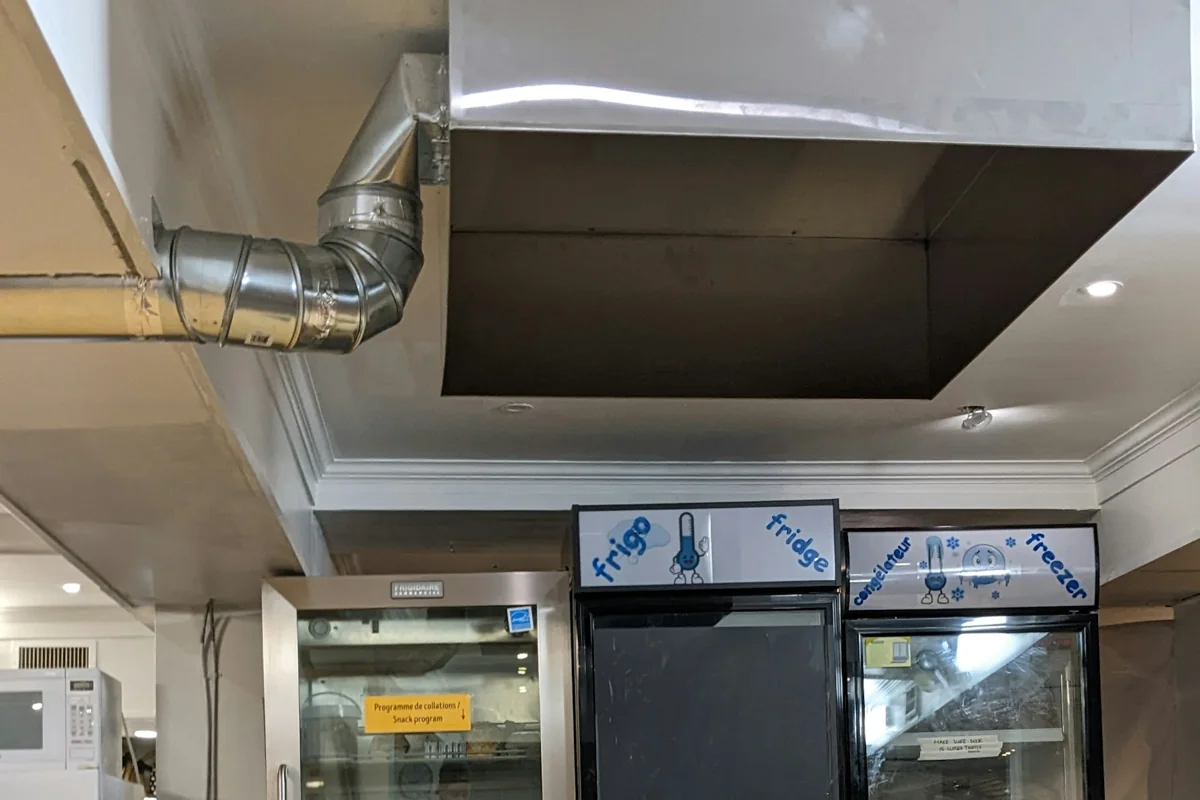
For an enquiry within the agreed commercial ventilation scope, include the issued drawings, specification, equipment schedule and interfaces. The handover checklist can help frame the required records. The photograph is an illustration of kitchen extraction and is not one of the study locations.
Source and review
Stanford research report — 6 October 2026. Reviewed by Cliventa on 21 October 2026. Follow the source for later changes.
Editorial stock photograph: Compagnons (@sigmund), used under the Unsplash licence. This is an illustration, not a Cliventa project or a photograph of the reported event.