
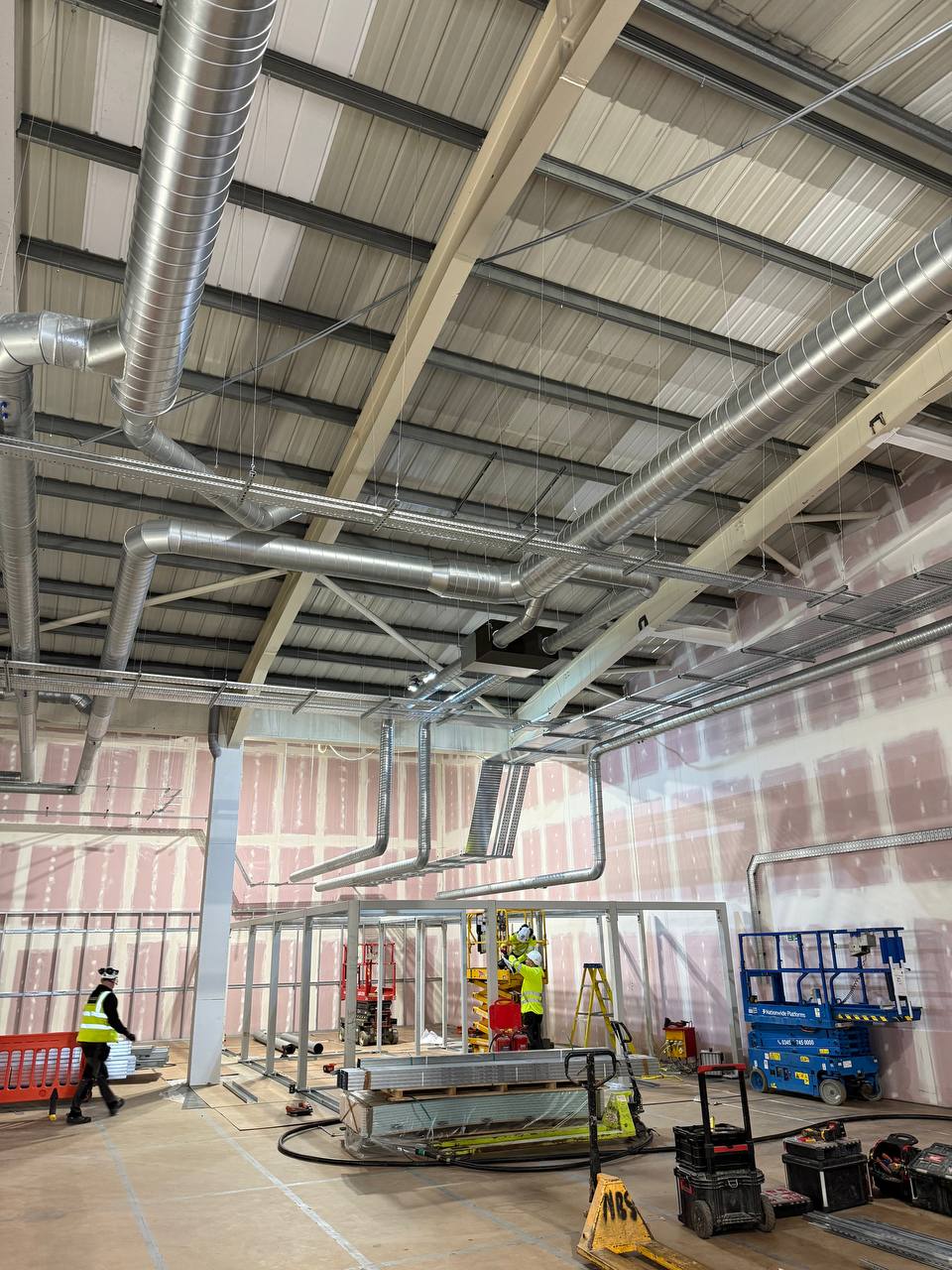
Short answer: there is no reliable stock number. Duct type and size, working height, access, delivery sequencing, other trades in the same zone and the available programme all affect the crew a project can use productively.
Why a generic headcount is not a programme
A crew of two or three may suit one area and be completely wrong for another. The useful question is whether the proposed labour matches the workface, access and sequence shown in the current project information.
The variables that change crew size
- Duct type and section sizeLarge rectangular sections at height require a different lifting and handling plan from small circular runs at low level.
- Working height and access equipmentMEWPs, towers, restricted plant rooms and risers change how many people can work safely and productively in one area.
- Delivery and material flowA single goods lift, limited loading slots or one-way riser access can become the real constraint, regardless of how many installers are available.
- Other trades in the same zoneElectrical containment, sprinkler pipework, ceilings and structure affect both sequence and available working space.
- Programme and workface availabilityMore labour only helps when enough clear, coordinated workfaces are available for crews to operate in parallel.
An illustrative planning example
Consider a commercial fit-out with one riser feed, standard rectangular ductwork and a four-week window shared with electrical first-fix. A single coordinated crew may be more productive than two crews competing for the same delivery route and ceiling zone. If the project has two independent risers, separate access and released workfaces, parallel crews may become practical.
This is an illustration, not a labour formula. The drawings, schedule, access plan and programme determine what is realistic for each project.
Common planning mistakes
- Sizing labour from programme duration without checking whether access can support that headcount.
- Assuming additional installers always produce a matching increase in output.
- Keeping the original crew plan after the programme or workface sequence changes.
- Ignoring other trades competing for the same ceiling void, riser or access equipment.
What Cliventa needs to review labour and programme
Send the current drawings, ventilation or ductwork schedule, proposed programme and sequencing, site access constraints, delivery arrangements and known adjacent-trade interfaces. Cliventa can then review the installation package against the information available rather than relying on a generic rule of thumb.
For related package information, see ductwork installation and our guide to preparing a ductwork RFQ.