
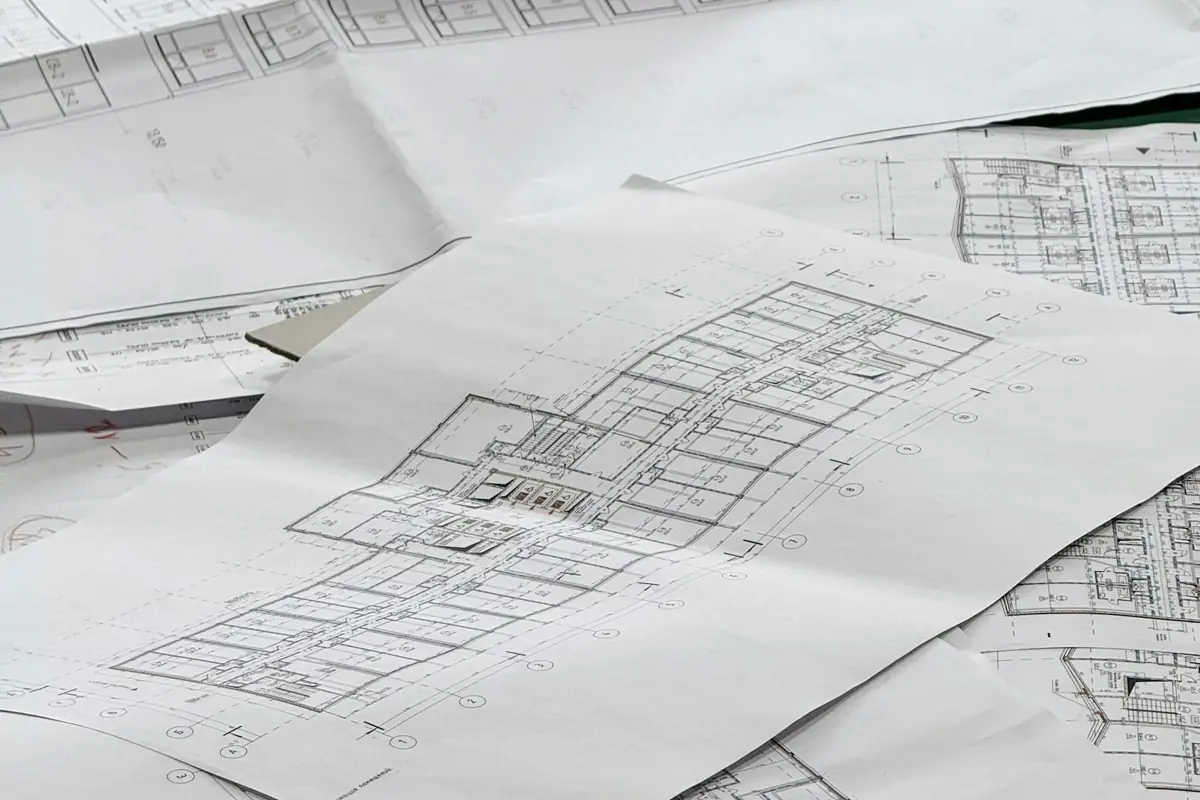
Short answer: an accurate ductwork quotation depends on five things arriving together: current drawings, a clear specification, the project's programme dates, the actual access and delivery constraints on site, and a straight answer on whether the package is labour-only or supply-and-install. Send a contractor two of those five and you'll get a number back — but it will be a guess wearing a decimal point.
Drawings tell a ductwork contractor what is being installed. They don't tell you how hard it will be to install it here. Two identical duct runs — same size, same length, same spec — can cost meaningfully different amounts to install depending on things a drawing alone rarely shows: whether the riser is accessible from one level or has to be fed from both ends, whether the ceiling void is shared with three other trades on a tight sequence, or whether the building is occupied and access is restricted to specific hours.
Why "just send the drawings" isn't enough
This gap produces the two classic bad outcomes at tender stage: a price that's too low because the contractor assumed a best-case site, or a price padded so heavily with contingency that it's not competitive. Neither helps a main contractor build a reliable cost plan.
What to send, and why each piece matters
- Current, revision-controlled drawingsA duct route that moves 400mm in the next design freeze changes fabrication, not just installation.
- The specificationPressure class, leakage class, any fire-rated or cleanliness (e.g. TR19 Air) requirements, and materials.
- Project locationAccess rules differ between a live retail unit, an occupied office and a greenfield new-build.
- Programme datesIncluding when the ductwork zone is genuinely available, and when handover/testing needs to be complete.
- Access and delivery constraintsLift availability, loading bay hours, working-at-height requirements, and whether other trades share the install zone.
- Labour-only or supply-and-installA fundamentally different pricing structure — and a common source of quotations that look comparable but aren't.
- Site photos, if availableEspecially for refurbishment work, where unknown void conditions is often the biggest source of quoted contingency.
- Your preferred response deadlineSo the contractor can tell you honestly whether a properly worked price is achievable in that window.
Common mistakes
Sending drawings without a specification forces the contractor to price against assumptions. Treating the RFQ as a formality once a preferred contractor is chosen produces a rushed price — and rushed prices get revisited later, usually as a variation. Not disclosing access constraints up front means a contractor who finds out about restricted working hours after mobilising will, rightly, reprice the work.
What Cliventa reviews
Cliventa's own RFQ process asks for exactly the inputs above: drawings, a ventilation schedule, project location, required start date, the specific service required, and a description of scope, plus site photos where available and your preferred response deadline. The more of this is confirmed before we start pricing, the closer our first number is to your final number.
For more detail on service fit, see our ductwork installation page. Once you've sent an RFQ, our guide to comparing subcontractor quotations covers what to check once prices come back.