
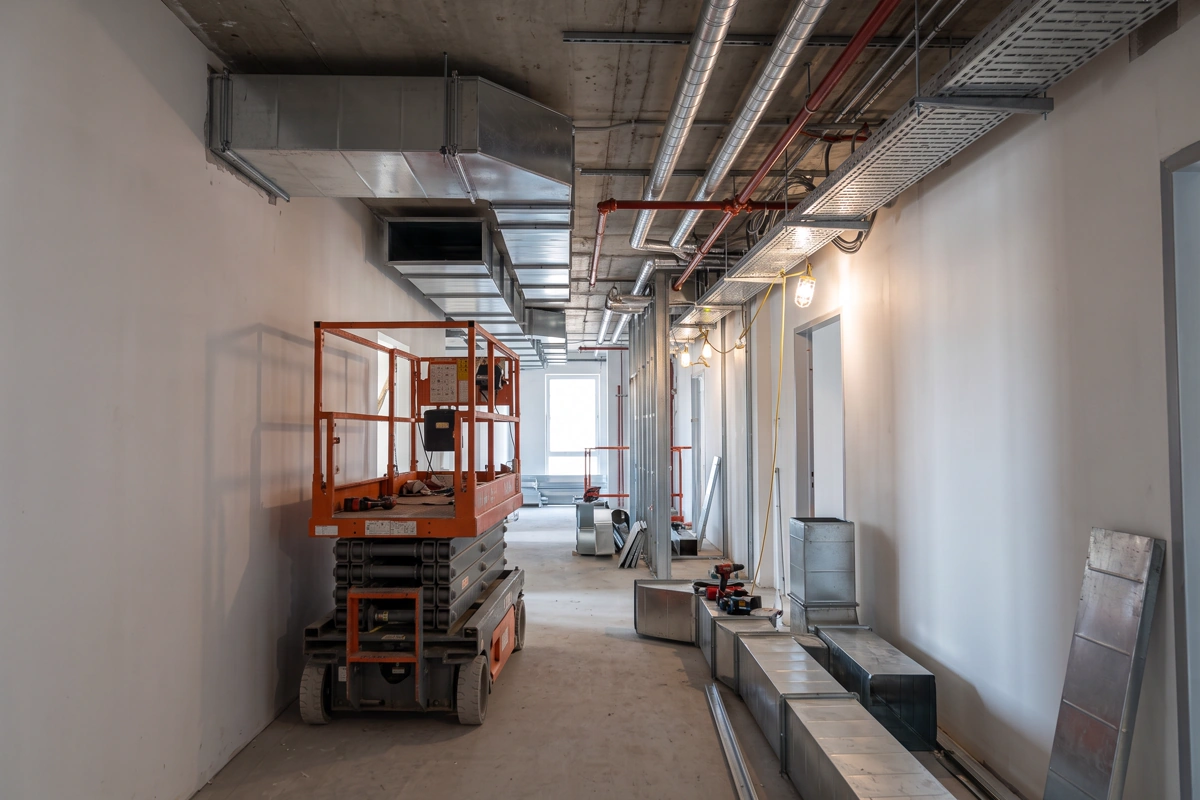
Short answer: many ventilation installation delays begin before the installers arrive. Late information, unresolved interfaces, restricted access, unrealistic area-release dates and slow technical decisions can stop a crew even when labour and materials are available.
A programme date alone does not make an area ready for installation. The team also needs coordinated information, access to the workface, materials in the right sequence and a decision route for technical queries. The points below are pre-start prompts, not a prediction about any particular project.
Common issues to review
- Late or unclear drawing revisionsA change issued after pricing, fabrication or mobilisation can affect routes, quantities and sequence. Keep a clear register of the information released for installation.
- Unresolved service interfacesDuctwork may share limited space with structure, pipework, containment and ceilings. Identify who coordinates open clashes and how decisions are issued to the site team.
- Access or workfaces not readyIncomplete areas, restricted routes, unfinished openings or missing access arrangements can prevent installation even when labour is available.
- Delivery and storage constraintsDuct sections and associated components may need planned delivery slots, suitable unloading and protected storage close to the work area.
- Trade stackingSeveral trades working in the same zone can reduce productive access. Area-by-area sequencing makes dependencies and hand-offs easier to see.
- Technical queries left openQuestions about routes, details or responsibility need a named decision route, an owner and a date aligned with the programme.
- Close-out requirements confirmed lateLabels, photographs, records, snagging and assistance with testing should be identified where they form part of the agreed package.
Delay is often a flow problem, not a labour problem
When progress falls behind, adding installers may look like the fastest response. It only helps when the team has enough approved information, material and clear workfaces to use the extra labour productively. If everyone depends on one riser, one goods lift or one unanswered query, the bottleneck remains.
Review progress by area rather than only by total headcount. For each zone, confirm what is ready, what is blocked, who owns the blocker and when the decision or preceding work is due. This gives the project manager a more useful recovery conversation than a general request for more people.
Warning signs before work starts
Multiple drawing sets are circulating without a clear status. The programme shows an installation start but no area release. Access and storage are described only as “to be agreed”. Responsibility for penetrations, insulation, controls or testing is assumed rather than recorded. Material orders depend on a design decision that has no response date.
One warning sign does not necessarily mean the programme will slip. It does mean the item deserves an owner, a decision and a date before the installation team becomes dependent on it.
Build a more useful pre-start review
Bring the current drawings, scope, programme and interface list into one review. Confirm which areas are genuinely available, which decisions remain open, what materials are needed and what information the installation team should use. Record changes rather than relying on informal conversations.
For tender-stage preparation, use our ductwork quotation checklist. For package responsibilities, see how to define a ventilation scope before award.
A practical weekly review
- Confirm the current drawing and specification revisions for each active area.
- Compare planned area release with actual access available to the installation team.
- Review programme-critical queries separately from general technical correspondence.
- Check delivery slots, storage and vertical transport against the next planned workface.
- Record interface decisions and make sure they reach the people installing the work.
- Revisit labour only after the information, material and access constraints are understood.
How Cliventa approaches suitability
Cliventa reviews suitable opportunities against the available drawings, specification, scope, location, programme and known site constraints. Installation and handover support are then delivered in line with the package agreed for the project. If the programme or available workfaces change, the installation plan should be reviewed against the new conditions.