
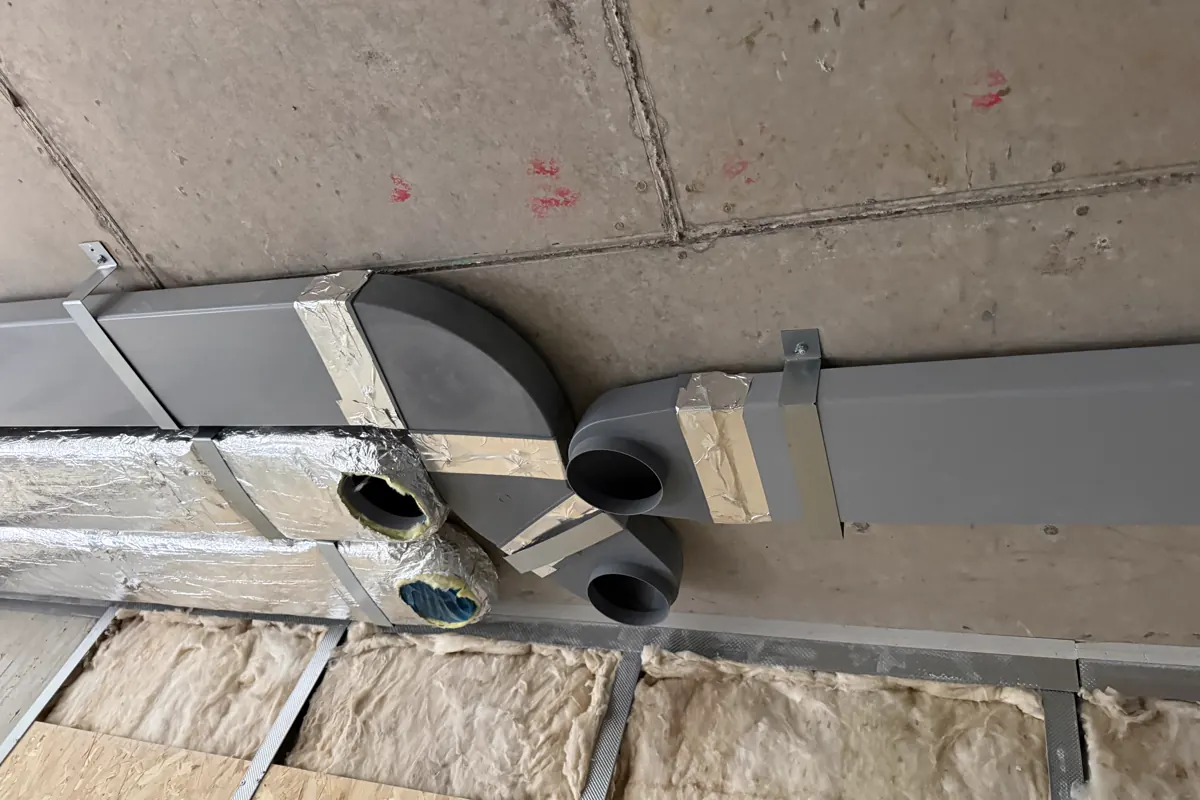
Short answer: before mobilisation, confirm the issued information, written package boundary, first available workface, access arrangements, programme sequence, project-specific controls and required installation records. A start date is not a complete start instruction if the team cannot identify what to install, where to begin or which interfaces are ready.
This checklist is written for commercial projects where ventilation work sits inside a wider M&E and construction programme. It is a practical coordination aid, not a replacement for the construction phase plan, project procedures or competent health-and-safety advice.
1. Confirm the information status
Identify the drawings, specification, schedules and coordinated information that are current for construction. Record the revision and issue date rather than relying on a drawing found in an email chain or site folder. Where an area is not fully coordinated, agree whether it is released, held or subject to a clearly recorded assumption.
- Issued ventilation layouts and details.
- Plant, grille, damper and equipment schedules relevant to the first zone.
- Specification requirements that affect materials, supports, insulation, testing or documentation.
- Known design queries and the person responsible for each response.
2. Put the package boundary in writing
The pre-start meeting should not reopen the entire tender, but it should expose gaps before they become site disputes. Confirm who supplies and installs ductwork, supports, access panels, fire-stopping interfaces, controls connections, insulation, builders' work, testing and commissioning support. Record exclusions and dependencies in the same place as inclusions.
Our guide to defining ventilation scope before award provides a fuller package-boundary review.
3. Release a real first workface
Name the floor, zone or room where productive work can start. Check that preceding work is sufficiently complete, the route is accessible, reference levels are available and obvious clashes are resolved. If only part of a zone is ready, show the limit of release and the return date for the blocked section.
A labour start without a usable workface creates movement rather than progress. It also makes early reporting unreliable because attendance is mistaken for installed output.
4. Agree access, loading and storage
Confirm the delivery route from vehicle to workface, booking rules, unloading arrangements, goods-lift restrictions, temporary storage and how long sections or bulky fittings will reach their install position. Review working-at-height access against the actual route and ceiling level, not a generic statement that access will be provided.
For the detailed logistics review, use the companion guide on ductwork installation site access.
5. Align the sequence with adjacent trades
Ventilation routes commonly interact with structure, partitions, ceilings, electrical containment, pipework, fire protection and finishes. Agree the intended order, the information cut-off for fabrication and any hold points before work becomes concealed. A current short-term programme is more useful at pre-start than an outdated master programme with no workface detail.
6. Check project-specific controls
The Health and Safety Executive states that contractors must plan, manage and monitor their work, coordinate with others and provide appropriate information, instruction and supervision. Review the method and risk controls against the actual site, planned equipment, delivery method and first workface. Confirm induction, permits, emergency arrangements and supervision routes required by the principal contractor.
Relevant official references include the HSE pages on contractor roles and responsibilities and planning construction work, together with the Construction (Design and Management) Regulations 2015.
7. Define evidence and communication
Agree how progress, blockers, changes, inspections, test results and photographs will be recorded. Name the people authorised to issue information and confirm commercial or technical changes. The purpose is not additional paperwork; it is to keep the installation record aligned with what the project team believes has been released and completed.
Pre-start decision
Finish the review with three lists: ready to start, required before start and required by a dated hold point. Assign an owner and due date to every open item. If the first workface, issued information or safe access is still undefined, record that plainly rather than converting uncertainty into an unrealistic mobilisation promise.