
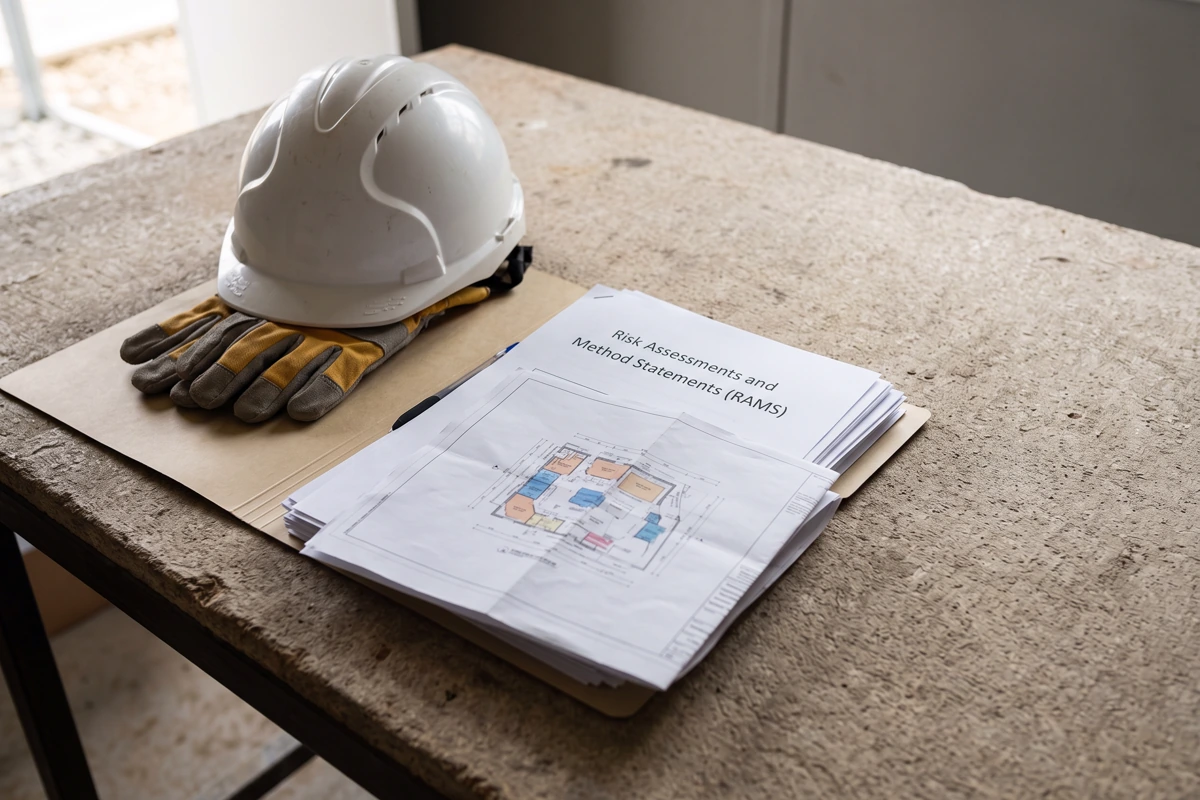
Short answer: ventilation RAMS should identify the hazards associated with the actual site and explain the controls and work sequence in practical terms. They should cover access, work at height, deliveries, lifting, manual handling, cutting or hot works where applicable, other trades, occupied areas and emergency arrangements relevant to the project.
HSE's risk-assessment guidance describes a process of identifying hazards, assessing and controlling risk, recording significant findings and reviewing controls. HSE also explains that method statements can communicate a safe system of work and should describe the logical sequence of the job. See the official guidance on managing risk and construction method statements.
Information needed before RAMS can be specific
- Work scopeCurrent drawings, specification, package boundaries, equipment and the tasks to be completed.
- AccessCeiling heights, risers, plant rooms, delivery routes and the approved access equipment or scaffold arrangements.
- Site conditionsOccupied areas, working hours, exclusion zones, live services, structural constraints and housekeeping requirements.
- InterfacesOther trades working in the same zone, preceding works, permits and responsibility for isolations or openings.
- Emergency arrangementsSite induction information, first aid, fire and evacuation arrangements provided by the principal contractor.
What the document should explain
The risk assessment should identify who may be harmed, the controls selected and any residual requirements. The method statement should then explain how the installation will proceed: delivery, unloading, movement to the workface, access, installation sequence, tool use, checks, waste removal and leaving the area safe.
Specific controls may be required for work at height, lifting equipment, manual handling, noise, vibration, dust, hazardous substances or hot works. The exact content depends on the real task. RAMS should not invent controls for work outside the agreed package.
Review points for the project team
- Does the document reference the current scope and location?
- Do the access method and work sequence match the site?
- Are responsibility and supervision clear?
- Are permits and interfaces identified?
- Can the operatives understand and follow the sequence?
- Is there a process to brief changes and review controls?
RAMS must stay current
A document prepared before mobilisation may need review when the design, workface, access method or sequence changes. The project team should record the change, check whether the controls remain suitable and rebrief affected people where necessary.
For wider appointment checks, use the ventilation subcontractor prequalification checklist. RAMS form one part of the evidence, not the whole selection decision.
How Cliventa approaches RAMS
For an agreed installation package, Cliventa prepares or updates RAMS using the project information supplied and the conditions understood before mobilisation. Final acceptance and site controls remain subject to the project-specific arrangements and the relevant dutyholders.